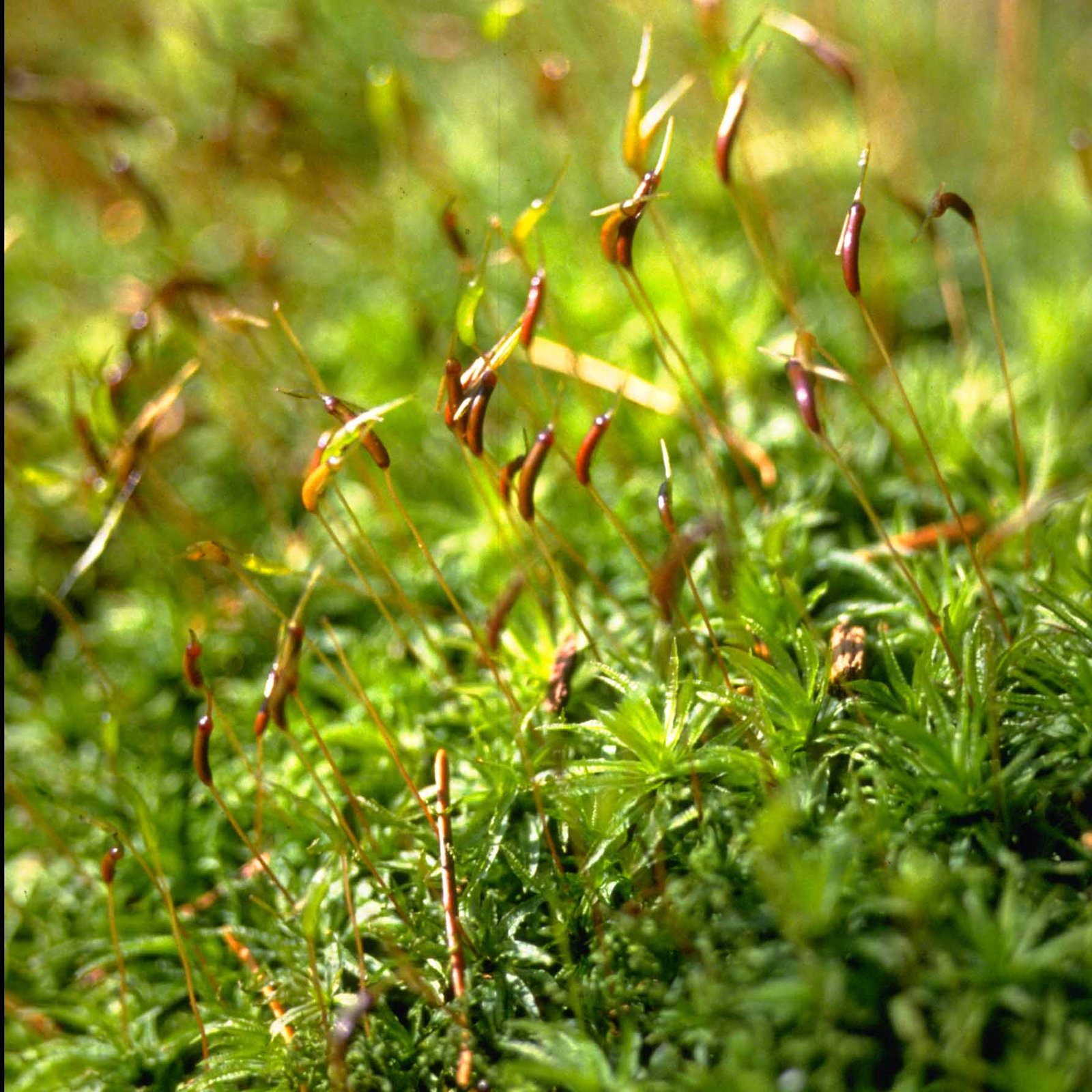
Bryophytes are tiny, moisture-loving plants clothing forest floors and tree trunks. They act like sponges storing water and releasing this gradually to their surroundings.
Like the rest of land plants, the Bryophytes are Embryophytes (plants that produce an embryo) and are a distinct lineage from other land plants. Bryophytes and vascular plants evolved independently from the first land plants. Like the rest of the land plants, they evolved from green algal ancestors, closely related to the Charophytes. There are some 20,000 species of Bryophytes (Wilbraham, 2025) making them the most species-rich group of land plants after the flowering plants.
With it varied landscape and habitats, it is not surprising that about one third of the world’s Bryophyte species are found in Tropical America, with high levels of endemism (Gradstein et al., 2001).
There are 3 groups of Bryophytes
Mosses (~12,500 species)
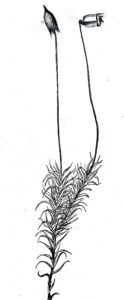
Mosses are radially symmetrical, with multicellular rhizoids and spirally-arranged leaves which are never lobed and may have a costa (midrib).
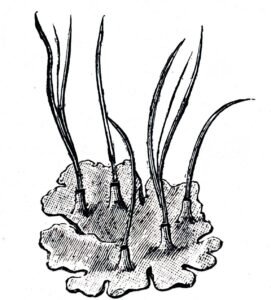
Liverworts (~7,000 species) – comprise thallose and leafy liverworts
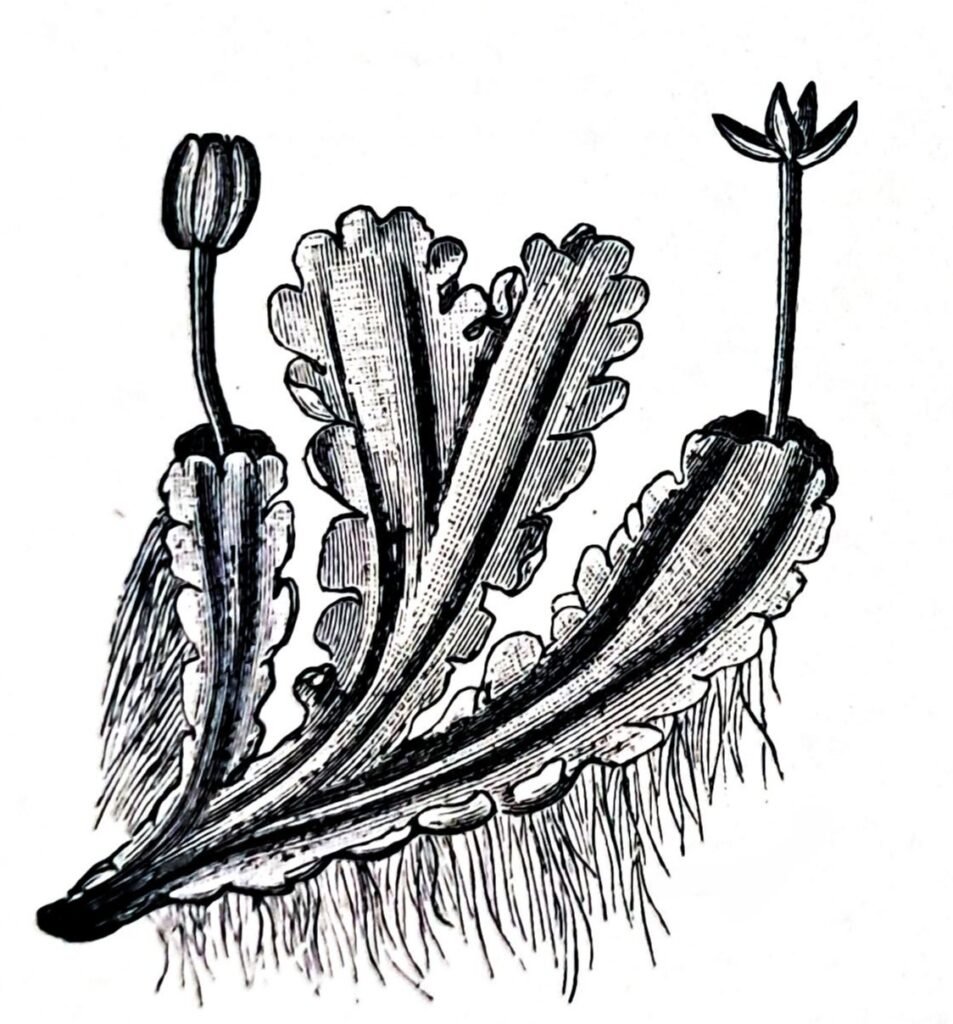
[Strasburger et al. (1908) p429]
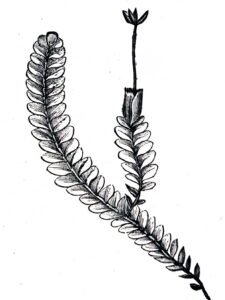
[Strasburger et al. (1908) p429]
Liverworts are bilaterally symmetrical with unicellular rhizoids; leaves of leafy liverworts are arranged in one plane, may be lobed and never have a costa (midrib). Thallose liverworts are absent from drier Caribbean islands like Barbados.
Hornworts (~200 species) – which we will NOT cover in this course
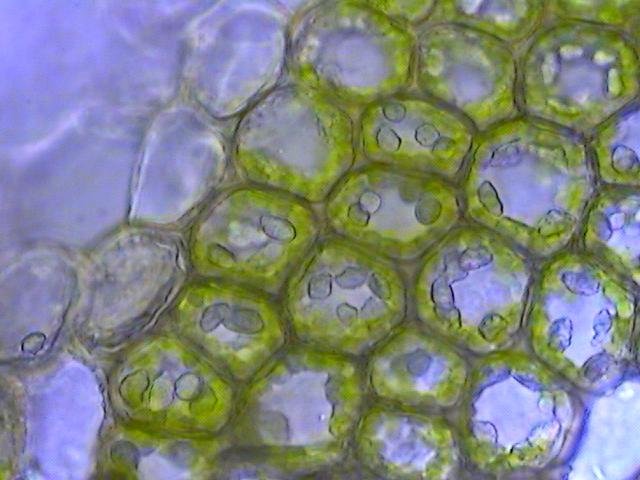
Liverworts contain oil bodies which are single membrane-bound organelles mosses and other land plants lack.
Liverwort leaf cells with 2-5 (grey) oil bodies (as well as chloroplasts).
Photo © Steven L. Jessup
Click here and see if you can recognise these plants as liverworts!
Bryophytes in summary…
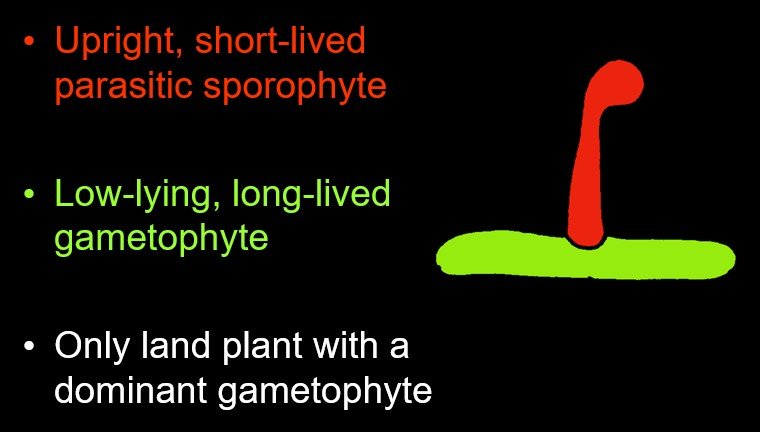
Click here to get a look at Bryophyte groups from “Down Under”
Its time to get the full picture of the Bryophyte Life Cycle:
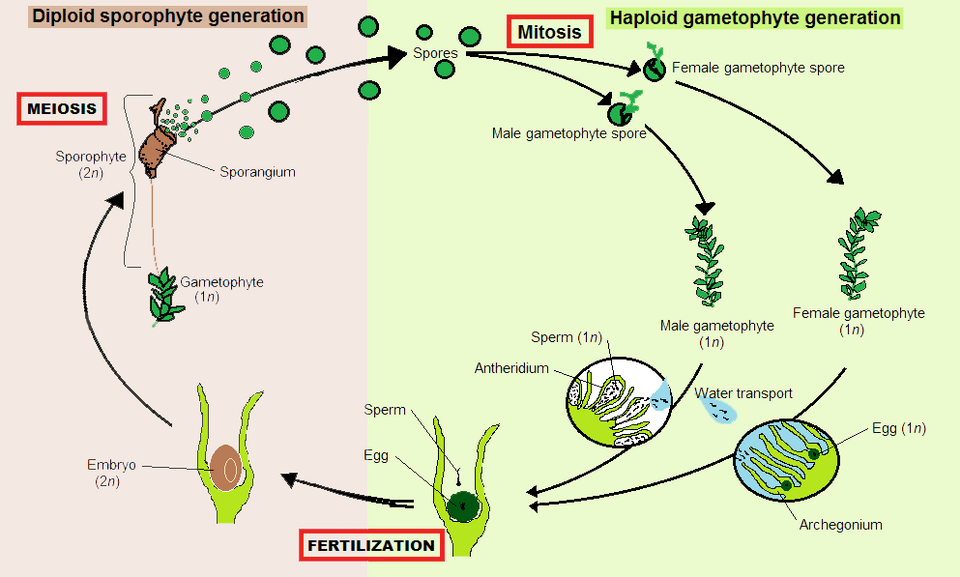
Bryophyte life cycle using a moss example. Wikimedia Commons CC-BY-SA-3.0

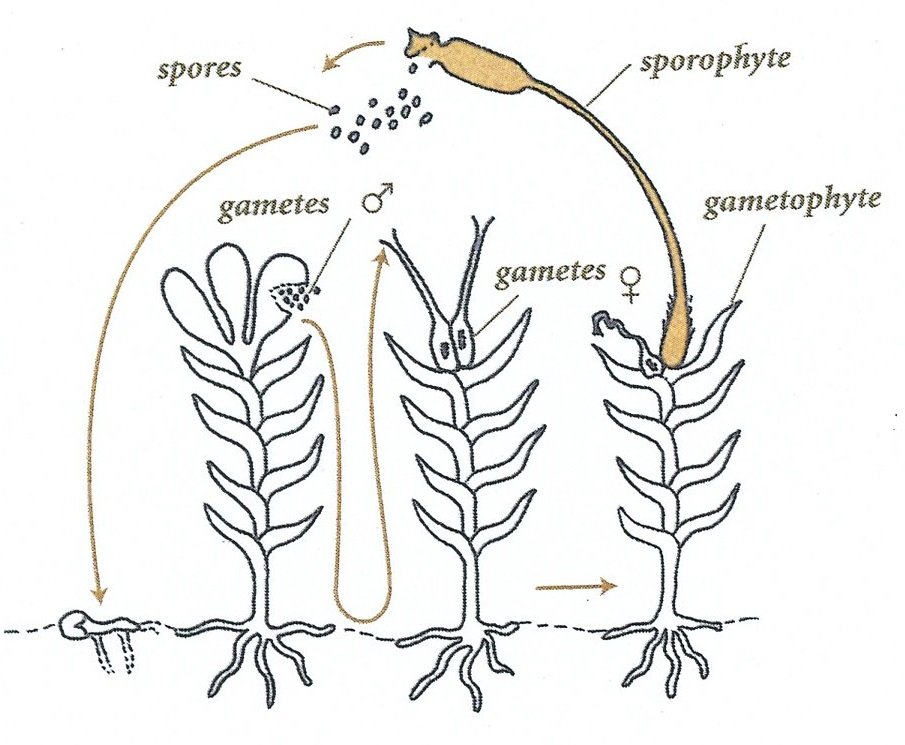
The Bryophyte plant we typically see is a haploid gametophyte which bears male and female sex organs. In this typical plant alternation of generations the haploid non-motile egg and motile male gametes are produced by mitosis. The fertilised egg is retained on the gametophyte plant forming an embryo which develops parasitically on the gametophyte into the short-lived diploid sporophyte. The capsule of the sporophyte forms haploid spores by meiosis which are dispersed and germinate to form new gametophytes.
Like other land plants, Bryophytes:-
- are parenchymatous, not filamentous
- have multicellular sex organs, i.e. the gametes are enclosed by a sterile jacket of cells
- retain the zygote within the female sex organ where it develops
- have a waterproof coating of sporopollenin on their spores
Unlike other land plants, Bryophytes:-
- are small, low-lying, (generally) moisture-loving plants
- have no lignin
- have no stomata usually
- have no roots, only filamentous rhizoids
The Role of Bryophytes
- Many are pioneer plants, growing on bare rock and contributing to soil development.
- In bogs and mountain forests they form a thick carpet, reducing erosion.
- In forest ecosystems they act like a sponge retaining and slowly releasing water
- They provide habitat for other plants and small animals as well as microorganisms like N2-fixing blue-green bacteria
- Lacking a true cuticle they readily absorb whatever is around them and can serve as bioindicators of pollution and environmental degradation
- Bryophytes can colonise inhospitable areas left barren through mining activity, allowing new ecosystems to develop.
Bryophyte Physiology
These plants all require moist conditions for at least part of their life cycle. If really wet, they may grow as epiphytes.
Many bryophytes are desiccation-tolerant. They can lose water, become dormant and then imbibe water or spring back to life when it rains. Some can restore metabolic activity after being stored dry for years (Oliver, 2009). Similarly, many temperate mosses can survive freezing and thawing without damage.
Being prostrate, Bryophytes have much of their surface in contact with the substratum and readily absorb moisture this way. Water often is drawn along the surface of these plants by capillarity and this external water movement is important. In certain mosses, specialised transport cells, hydroids and leptoids, analogous to the xylem and phloem of vascular plants, are found at the centre of the stem. Click here for images of these.
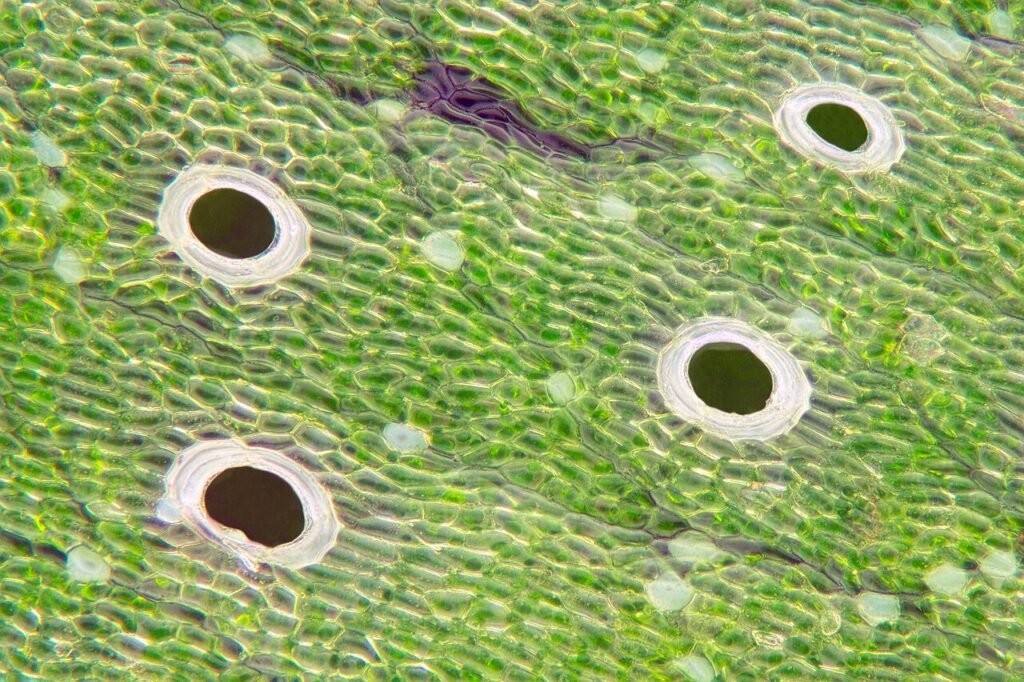

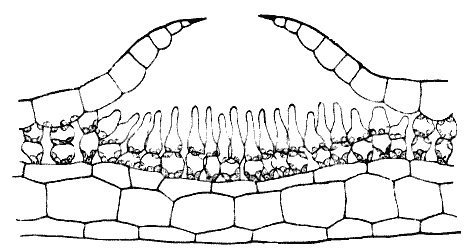
[Haberblandt (1914) p470]
Gases simply diffuse across the plant surface but liverworts also have special pores which are permanently open for gas exchange. Certain mosses also have stomata on their capsules (sporophytes).
Asexual Reproduction
Mosses and liverworts have two means of vegetative reproduction;-
Fragmentation – pieces of the gametophyte breaking off (the sole means of dispersal in the Arctic).
Gemmae – specialised propagules produced mitotically, often in cups.
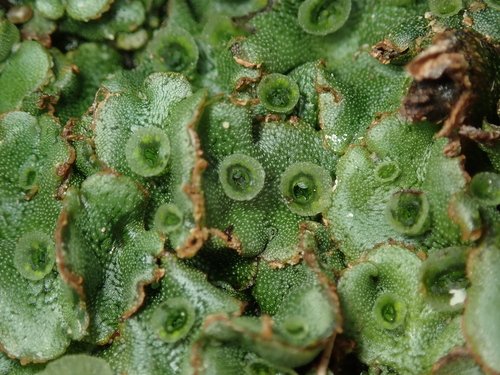
© András Schmotzer (iNaturalist, CC BY-NC 4.0)
Sexual Reproduction
In some Bryophytes, male and female sex organs are borne on separate gametophytes. Such species are said to be dioecious. In contrast, when a single plant carries both male and female sex organs the species is said to be monoecious. The male sex organs are termed antheridia (singular antheridium) and the female sex organs termed archegonia (singular archegonium).
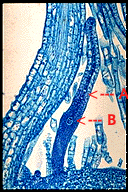
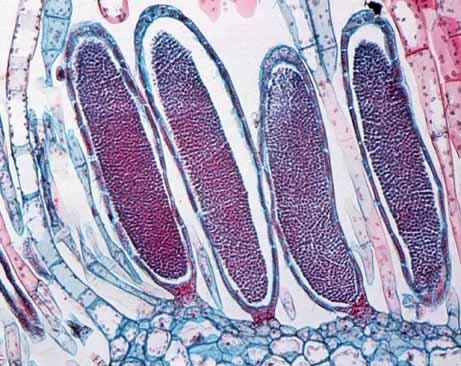
The sex organs are typically borne in clusters, often surrounded by sterile hairs. They may also be borne in a head on a stalk in some species.
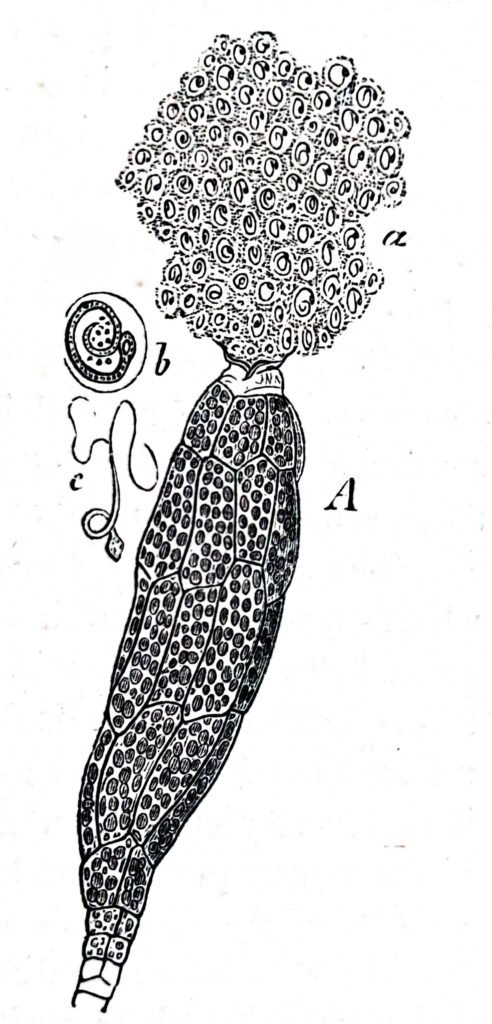
Antheridium (A) releasing a mass of antherozoids (a). At left is a single biflagellate antherozoid in the mother cell (b) and free (c).
[Sachs (1882) p371]
At maturity, the antheridium bursts releasing the sperm cells or antherozoids. These can only swim a few cm so that if the archegonia are not adjacent, the sperm rely on raindrops to “splash-launch” them to a suitable location.
The sperm cells are very compact with the nucleus wrapped in a minimum of cytoplasm. Some chemical exuded by the egg cell attracts the sperm which swims down the neck of the archegonium and fertilises the egg. The resulting zygote is the start of the sporophyte generation. This develops within the archegonium and remains parasitic on this for its entire life (except a few moss sporophytes which develop photosynthetic capacity.)
Check out this 10 minute animation of a moss life cycle on YouTube.
Or 3 minute Moss life cycle under the microscope.
Spore Dispersal in Bryophytes
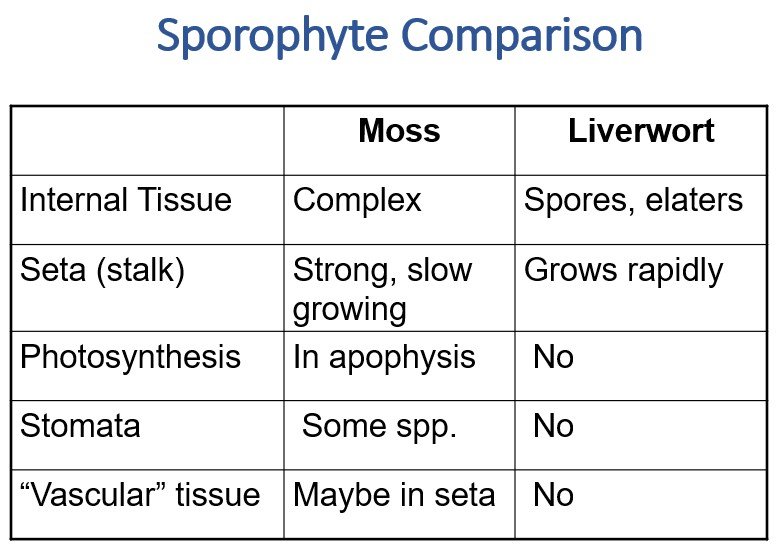
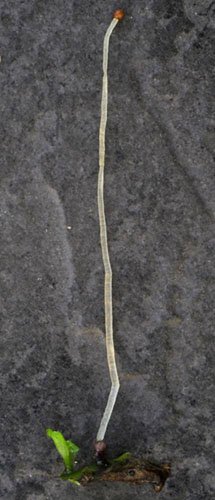
The sporophyte comprises a stalk bearing the capsule containing spores aloft. The liverwort and moss capsules are very different. The liverwort capsule is simpler, containing spores and a second cell type called elaters. The moss capsule has several tissues.
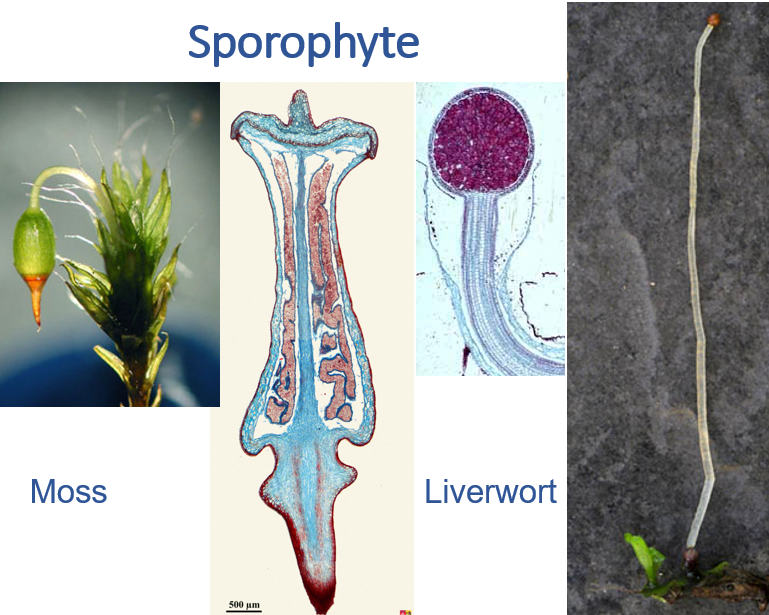
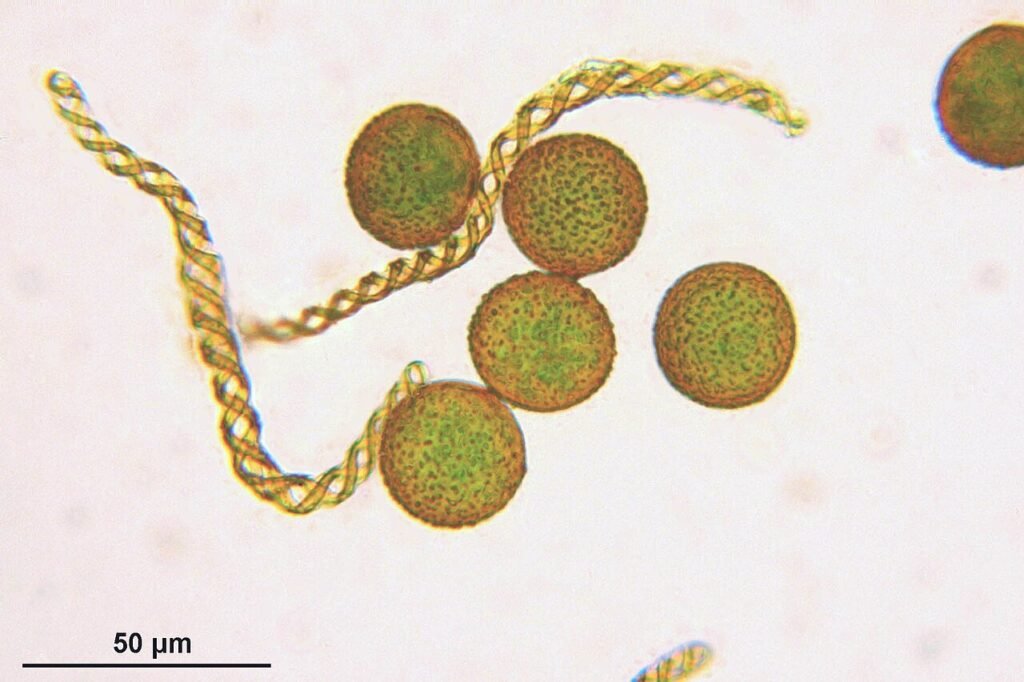
© Herman Schachner – Wikipedia. Public domain.
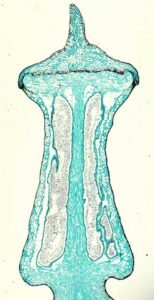
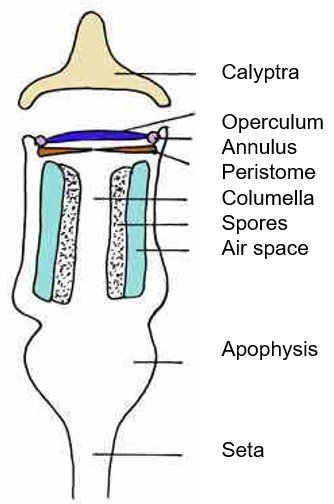
L.S. Moss capsule – with complex substructure.
Peristome structure has been a very important character in the taxonomy of mosses.
Liverwort Spore Dispersal
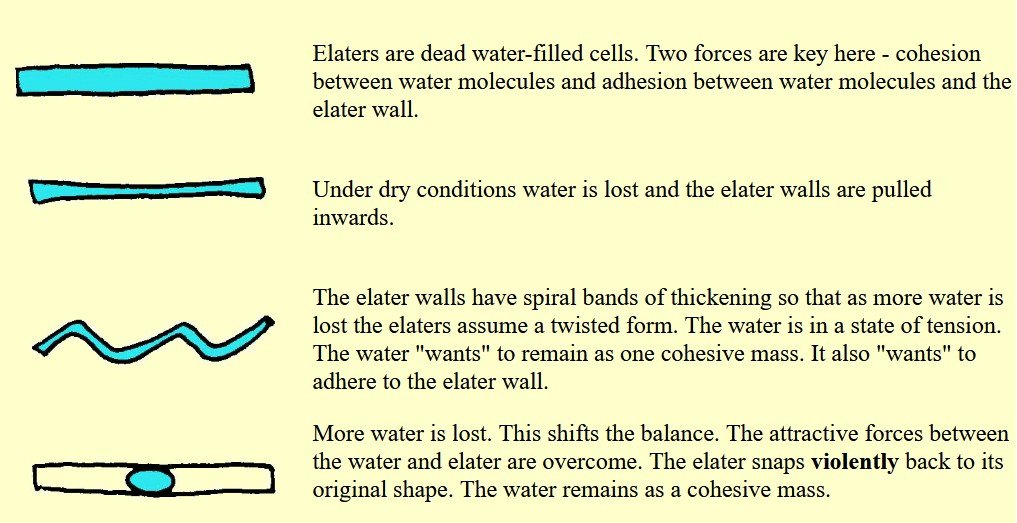
Under dry conditions, the liverwort capsule splits into valves or segments, exposing the spores and elaters. Elaters undergo hygroscopic movements causing spores to be flicked into the air (e.g. Pellia).
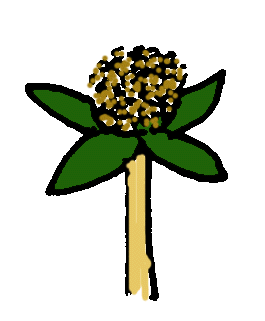
Hygroscopic Elater Movement
Cephalozia is an extreme liverwort example. The elaters are coated in spores and are attached at one end to the capsule wall.
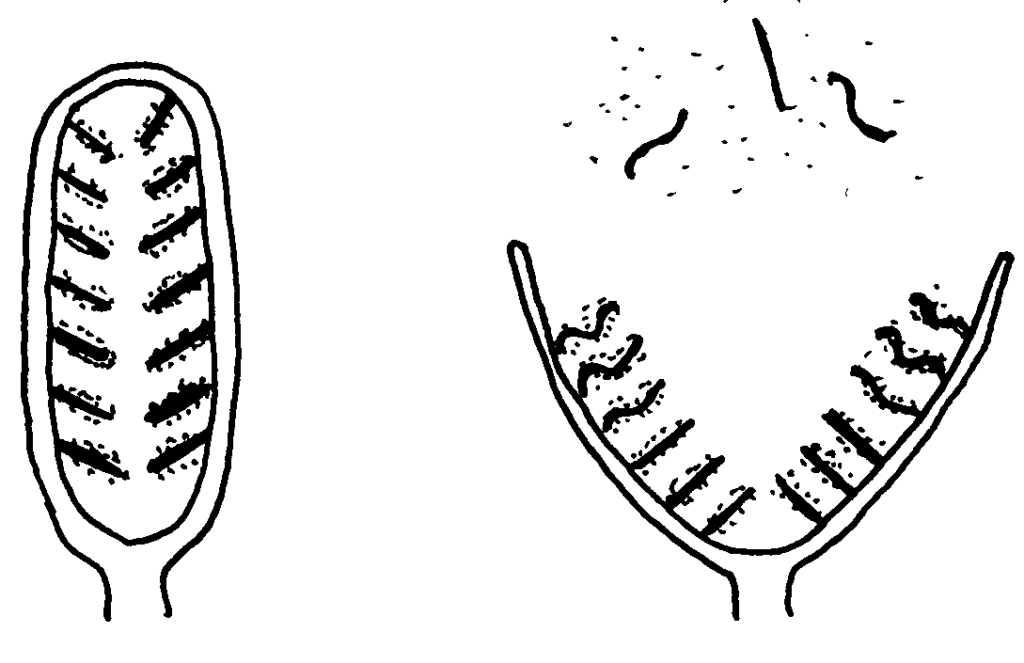
- The capsule splits open
- Violent hygroscopic movement of elaters detaches them from the capsule wall
- Flicking them and spores into the air
See further details on the Australian Bryophytes site
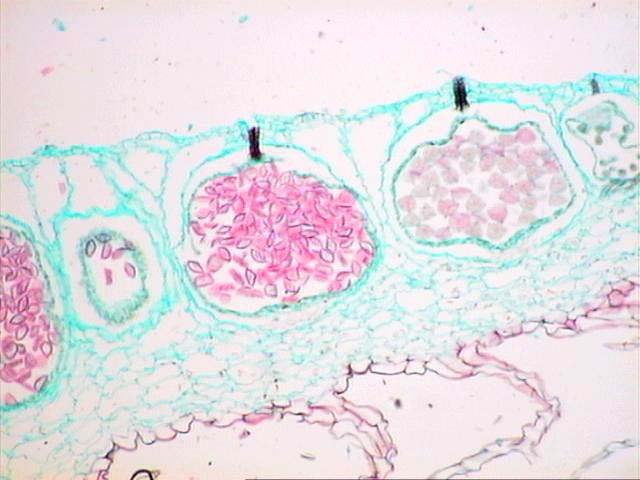
Riccia
Riccia is at the opposite extreme. It is an aquatic, thallose liverwort whose capsule remains embedded in the gametophyte thallus – it has no seta! The spores are few in number and large and are possibly animal-dispersed.
Moss Spore Dispersal
With the exception of one group of mosses (graphite mosses), all moss capsules have an operculum and peristome.
The general dispersal mechanism is as follows. Under dry conditions:-
- The calyptra (remnant of the archegonium) drops off
- The operculum is shed as a result of water loss by the annulus
- The peristome teeth bend outwards
- Spores fall out of the capsule and are carried by air currents
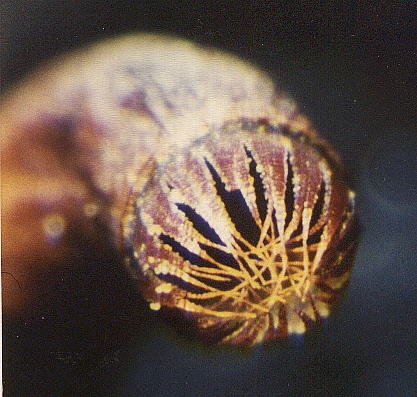
Photo courtesy of Dr Felix Schumm
See this YouTube video of capsule opening
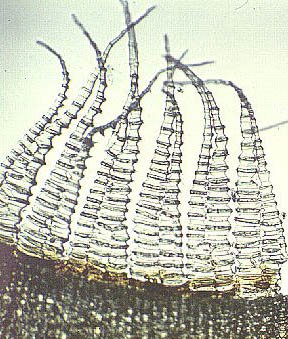
The peristome teeth are triangular two-ply structures which operate like trap-doors. One layer tends to readily absorb or lose moisture while the other has little affinity for water. What this means is that as water is lost one side of the peristome teeth shrinks while the other does not. This results in a bending of the teeth outward.
Photo courtesy of Dr Felix Schumm
Here are some interesting variations on this theme.
Diagrams after Ingold (1974).
Funaria
- Tips of the curved peristome teeth are fused in a central disc (epiphragm).
- Wet: Teeth elongate and slits between teeth disappear.
- Dry: Teeth shrink and gaps develop between teeth, allowing spores to sift out.
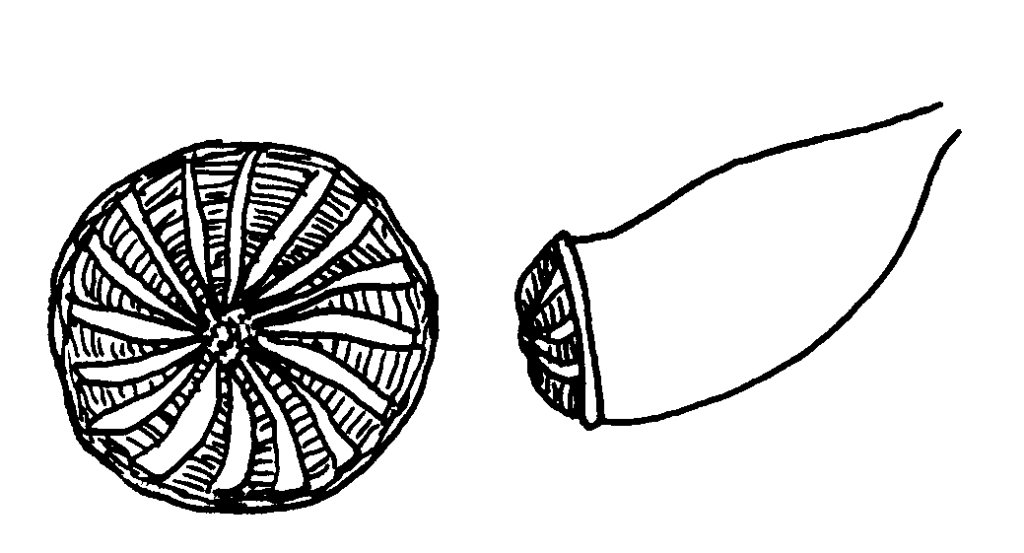
Polytrichum
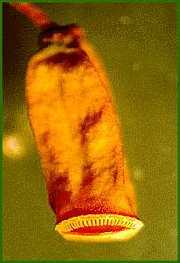
The central disc or epiphragm is here very large and the peristome teeth are tiny. This peristome does not respond to moisture but the epiphragm does.
Wet: Epiphragm loose, teeth not stretched, gaps between teeth disappear.
Dry: Epiphragm taut, teeth stretched, gaps develop between teeth, allowing spores to sift out.
Photo by Alan Hale
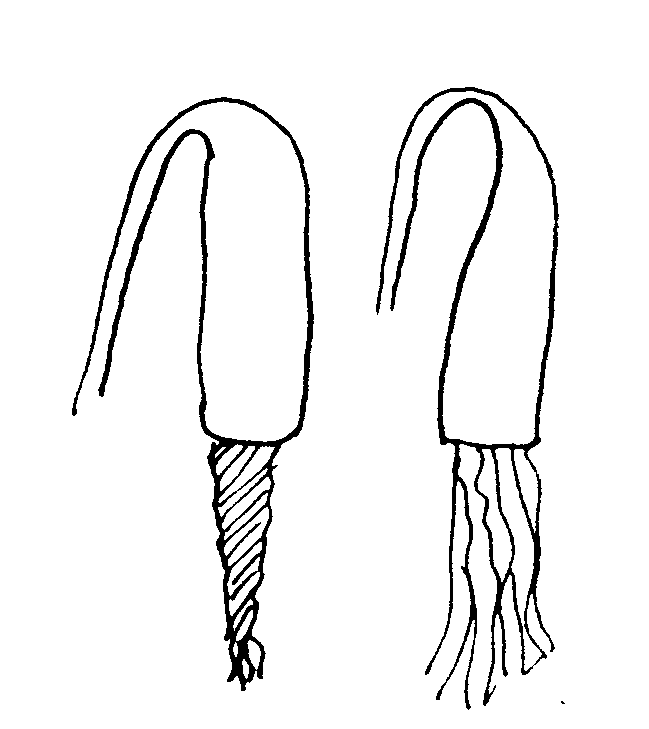
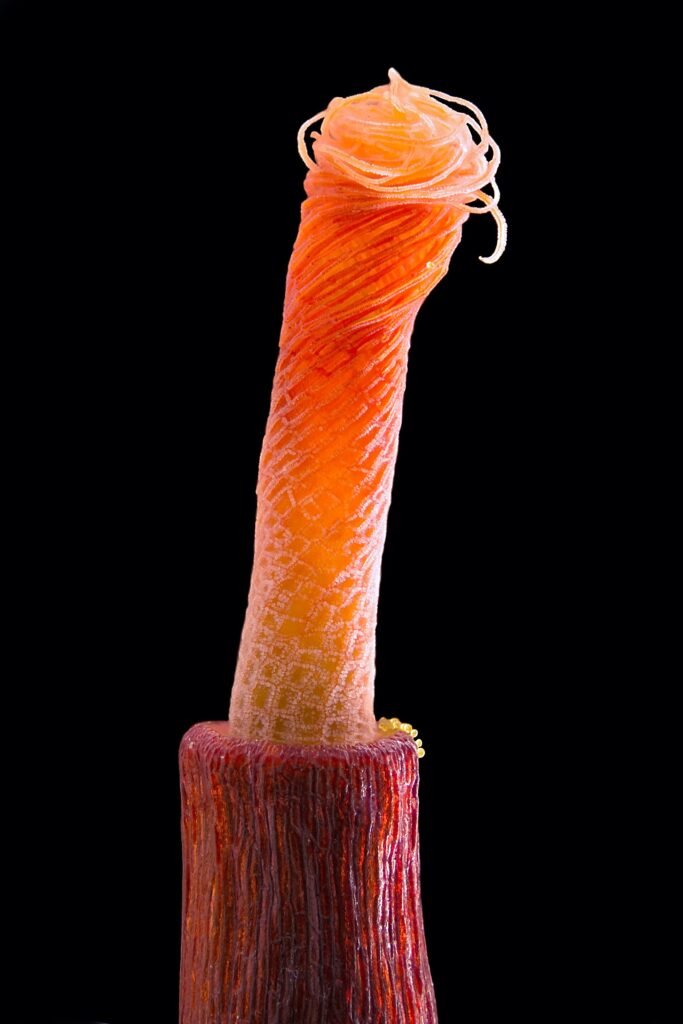
Tortula
Peristome teeth are long and hair-like.
Wet: Teeth elongate and are tightly wrapped around each other.
Dry: Teeth shrink, disentangling, allowing spores to sift out.
© Des Callaghan CC BY-SA 4.0

Sphagnum
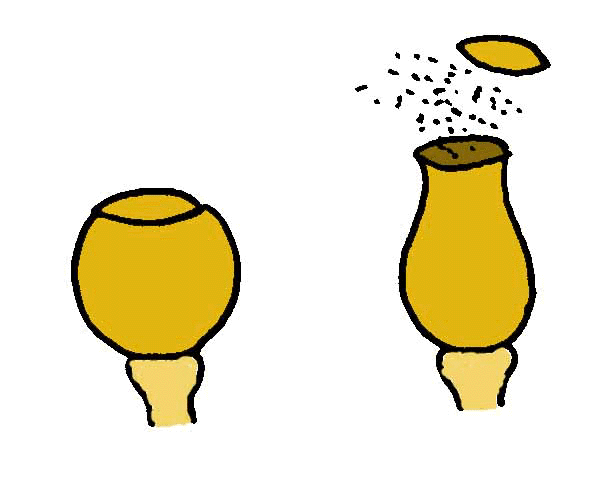
Sphagnum grows in temperate swamps (‘bogs’).
Its capsule contains air and spores but no peristome.
As the capsule dries, it shrinks, compressing the air inside (up to 5 atms!). The operculum is shot off and spores with it. This actually makes a popping noise.
See how Sphagnum spores reach such heights [Whittaker & Edwards (2010) Science 329: 406].
Sphagnum bogs cover 1% of the earth’s land area.
This beautiful photo of Sphagnum is by retired botanist Alan S. Heilman.
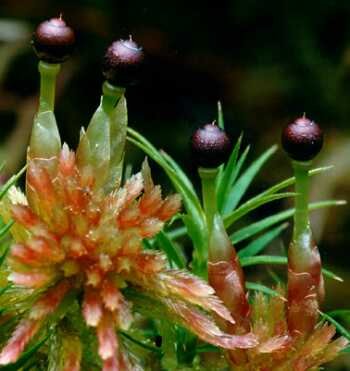
Sphagnum moss is acidic and has antibiotic properties. In fact, perfectly preserved human bodies over 2,400 years old have been found in sphagnum bogs.
Splachnum
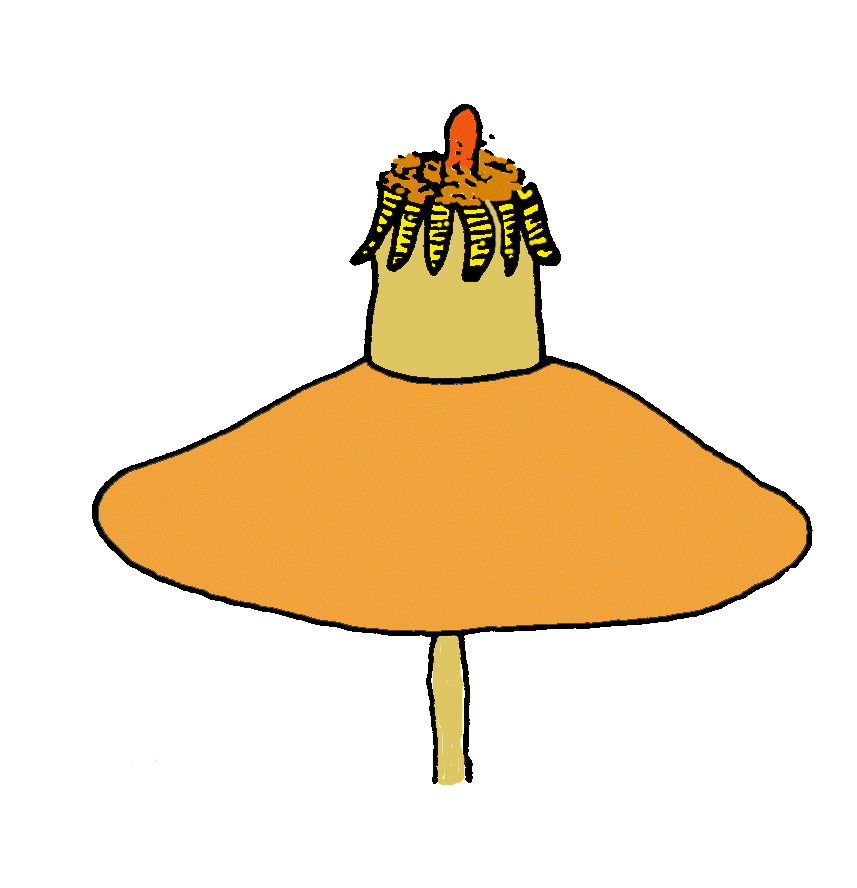
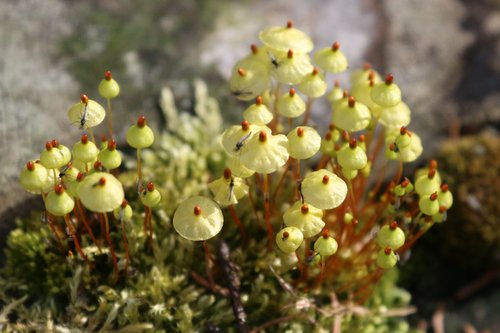
This grows on dung and the capsule with its broad, skirt-like apophysis resembles a flower!
The peristome forms a fringe at the top of the capsule. The columella sticks out of the top, covered in sticky spores. Flies are attracted to the capsule by its smell. The spores stick to the flies’ feet and are soon dispersed to another load of #@%& !
Spore germination
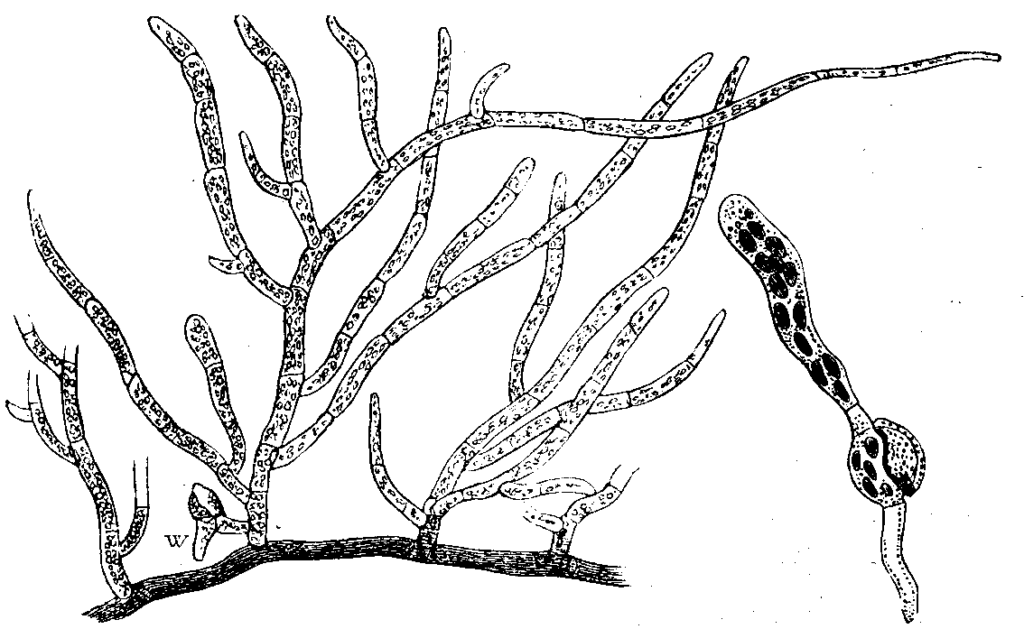
The spores once released are dispersed usually by air currents and, once they settle somewhere moist, germinate. This recommences the gametophyte generation. The spore first produces a filamentous stage called a protonema. These cells are full of chloroplasts.
To summarise the Bryophyte life cycle…
.
References
Ingold, C.T. (1974). Spore liberation in Cryptogams. Oxford University Press, Oxford.
Oliver, M.J. (2009) “Biochemical and molecular mechanisms of dessication tolerance in bryophytes”. In Bryophyte biology, 2nd Edn., eds. Goffinet, B. & A.J. Shaw, pp. 269-297, Cambridge University Press, Cambridge.
Richardson, DHS (1981). The biology of mosses. Blackwell Scientific Publications, Oxford.
Wilbraham, J (2025) Mosses, Liverworts, and Hornworts of the World: A Guide to Every Order. Princeton University Press, Princeton & Oxford.