Classification systems
Life used to be simple! Early scientists classified organisms as either Animal or Plant. This dichotomy was formalised by Carl Linnaeus in 1735. Animals moved, had a nervous system and showed heterotrophic nutrition, among other features. Plants, in contrast, being photosynthetic show autotrophic nutrition, with a cell wall enclosing the cytoplasm and generally didn’t move. Fungi aren’t photosynthetic but some bacteria are, but as both groups have cell walls they were looked upon as being plant-like. (We since know that their cell walls are really quite different from those of plant cells.) In this simple system of plants and animals, “plants” which had no recognisable shoot/root/leaf regions were said to have a body termed a thallus and were termed Thallophytes. In this earliest classification system bacteria, fungi and algae were all put into this grouping.
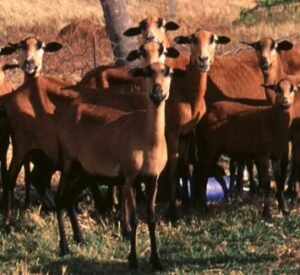
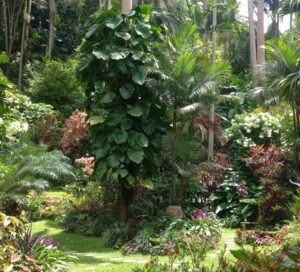
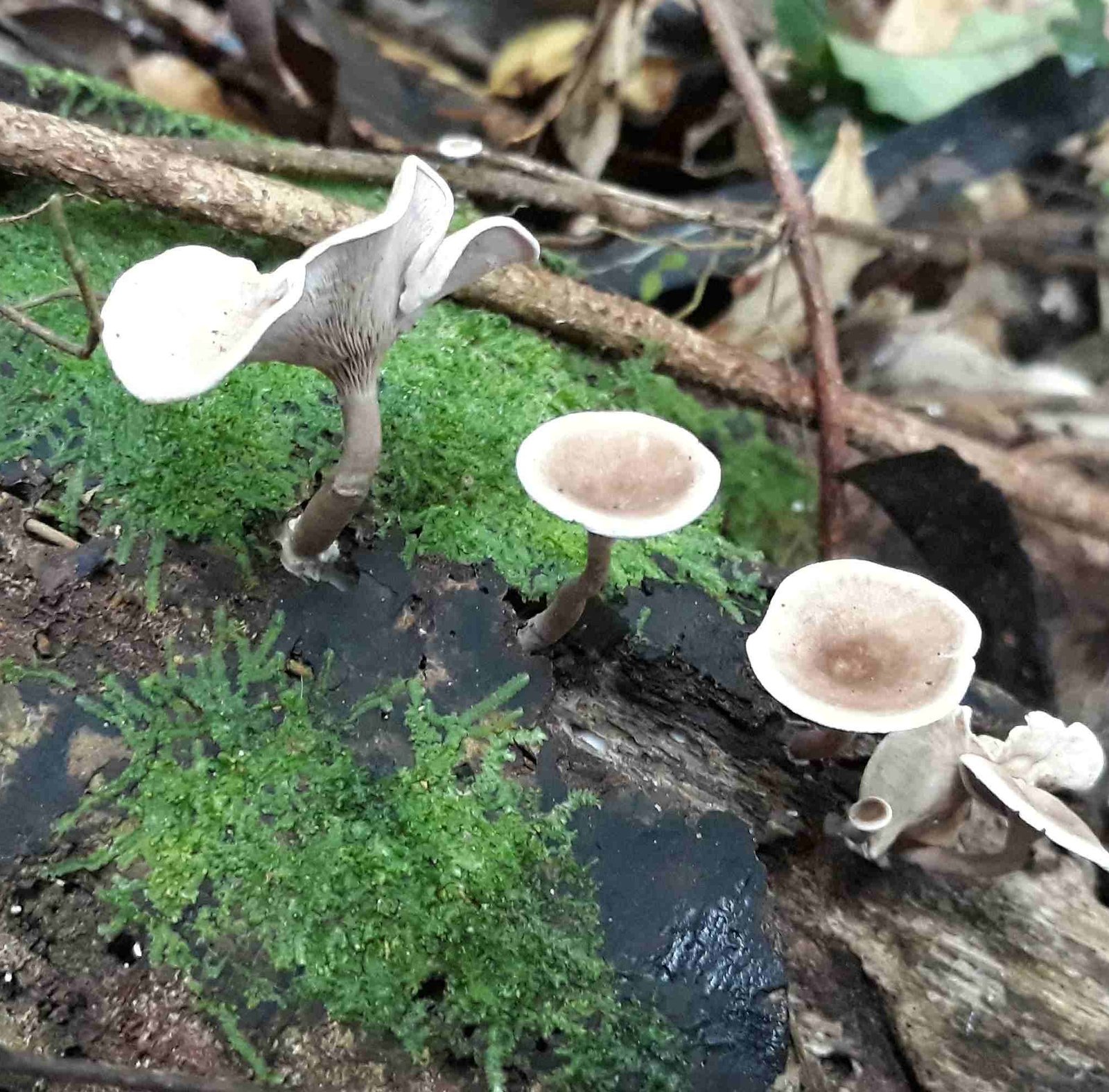
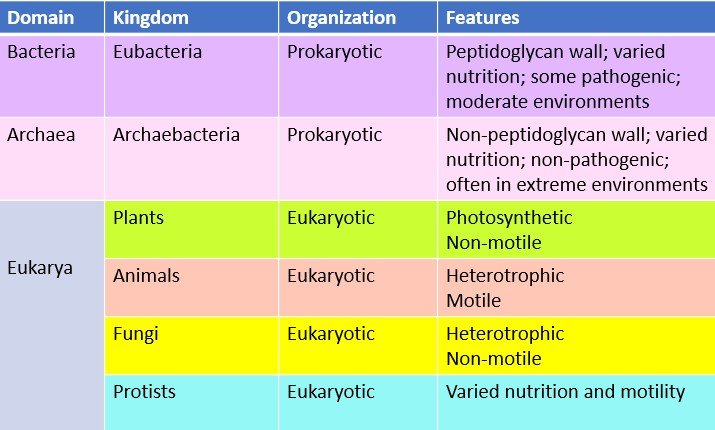
Scientists soon agreed that fungi belonged in a kingdom of their own as did bacteria, So now we had 4 kingdoms – plants, animals, fungi and bacteria (Kingdom Monera). Then there were organisms, mainly microscopic, that seemed to fit nowhere. These were termed protists. This essentially was the Five Kingdom Classification of Whittaker (1969) which held sway for quite a while.
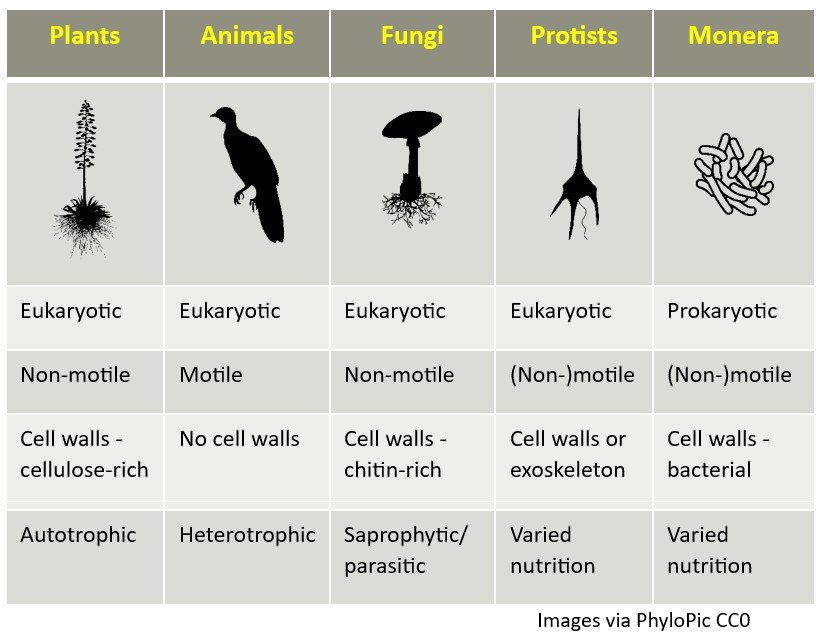
There is, however, a more fundamental divide than all that revealed by electron microscopy. We now know that based on cell structure we can divide organisms into prokaryotes and eukaryotes. This distinction was first proposed in the 1930s by Edouard Chatton. Eukaryotic cells (e.g. of plants, animals, fungi, protists) have a nucleus, internal membrane systems (i.e. organelles like mitochondria) and distinctive 80S ribosomes. Bacteria (then Kingdom Monera) had a radically different prokaryotic organisation without internal membranes, with naked DNA in place of a nucleus, with 70S ribosomes and with different flagellar structure. This prokaryote/eukaryote difference was at a higher level than Kingdoms, termed Empires or Domains.
A further step was the recognition that prokaryotes were not simply one group (Monera) but comprised two quite distinct groups of unicellular microbes, the Bacteria and the Archaea. This distinction became apparent when the comparison moved from the structural to the molecular level. This then became the three domain and six kingdom classification of Woese et al, (1990). The Protists remain a rat bag of organisms best described as none of the above. Protists are probably the most diverse group of eukaryotes and rather than one Kingdom comprise several lineages or clades. DNA sequence studies suggest these are several super groups which we are only now beginning to understand and will ultimately generate a new classification system.
Plant characteristics
All the features of plants can readily be understood in the context of their autotrophic mode of nutrition. If plants simply transform light energy into chemical energy then all that is required is for the plant to be anchored firmly in one place with a maximum surface area to capture sunlight. There is no need for plants to move or to have sophisticated nervous systems such as animals need to enable them to find food. (By analogy, have you ever seen a solar photovoltaic panel that moved? Its not an attribute that householders feel to be necessary!) Far from being boring and just sitting there and doing nothing plants by their subtlety are quite intriguing.
Because they cannot move, plants must be extremely responsive to environmental cues and have their life cycle in perfect synchrony with the seasons. Plants must tide over inhospitable dry seasons or winters as seeds, bulbs etc or in the case of some trees in a “bare-bones” leafless state. A plant cannot simply pick itself up like an animal and move to a better environment.
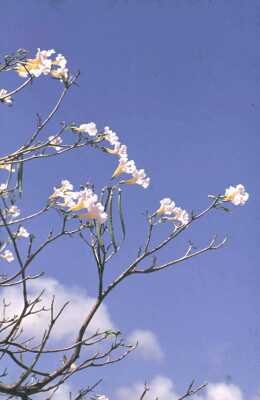
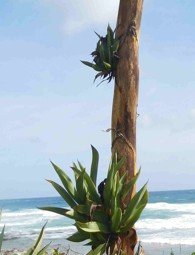
Because it is their lot in the web of life to be eaten by animals, plants have a unique mode of development. This involves plants growing by meristems at their tips. Plants also have remarkable powers of regeneration resulting from the fact that plant cells are totipotent. Any single plant cell can regenerate an entire plant with all its cell types – a feat no animal can match. A limb lopped off an animal is certain disaster. For a plant it just regenerates the missing portion!
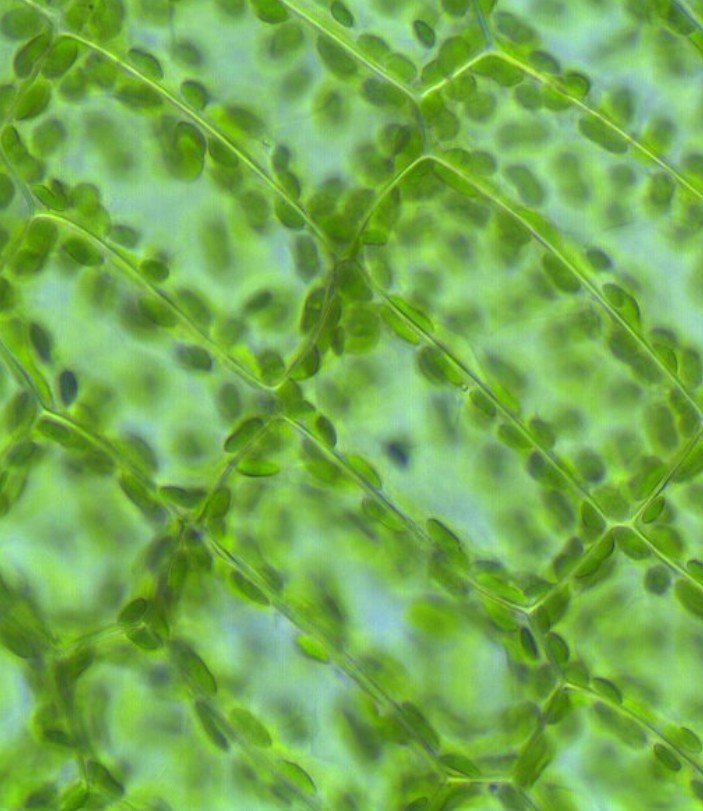
Plants use the cheapest material around to generate size – water and carbohydrates (Wiebe, 1978). They have a unique means of attaining stature with the most basic of skeletal materials – no bones, no expensive proteins! Each plant cell comprises a protoplast with a central vacuole which makes the cell much bigger than it would otherwise be. The protoplast is enclosed by a cell wall based on polysaccharides. This mutual antagonism between protoplast and cell wall makes each cell a turgid little box. This simple construction principle that allows herbaceous plants to stand erect relying on this system of one turgid box on top of the next!
Photo by Kristian Peters CC
Plant groups
There are several groups of plants we will look at as we examine how plants evolved on this planet. There are several plant classification systems and much disagreement, e.g. are the ferns a phylum or a class or order within a phylum? So, rather than use a formal classification system we will simply refer to these groups by their informal names;-
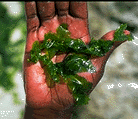
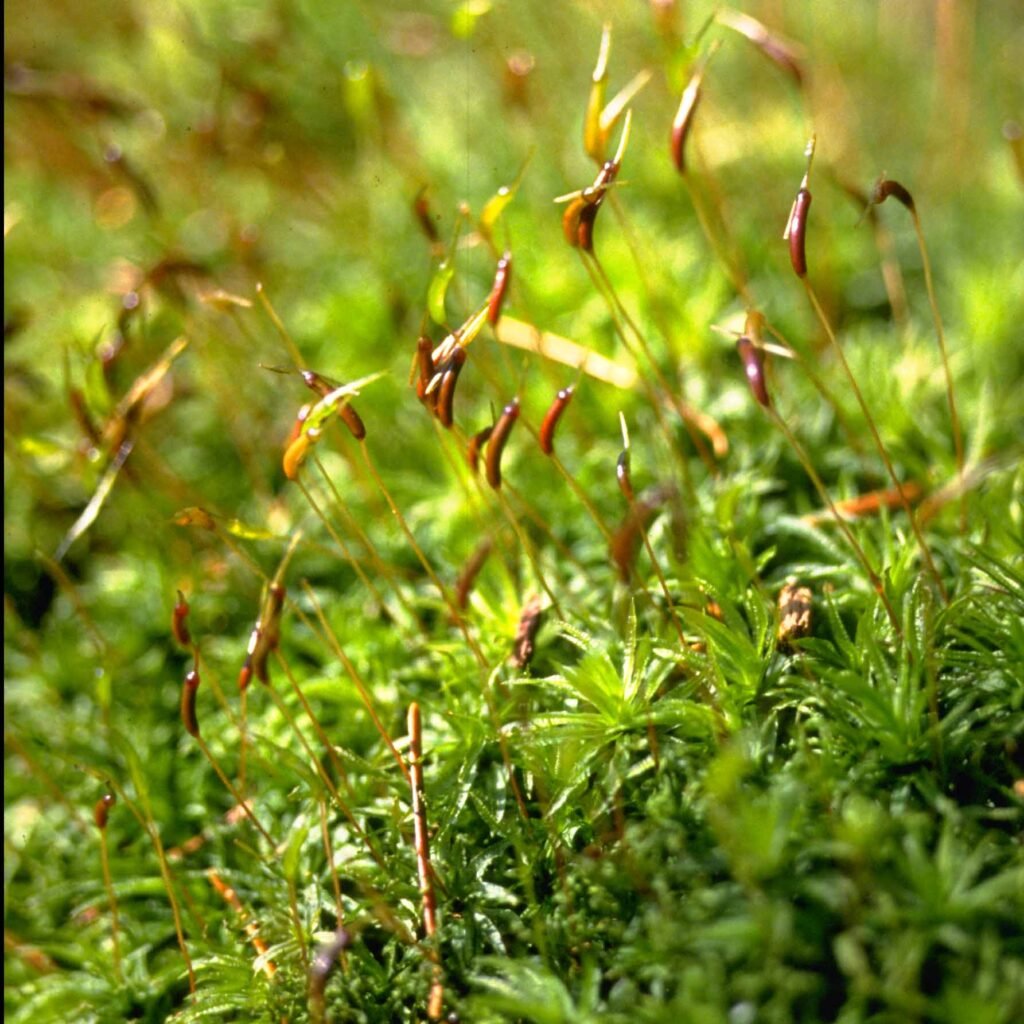
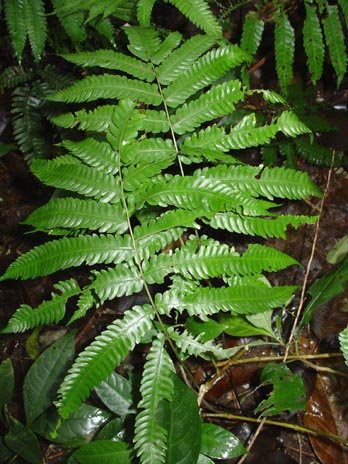
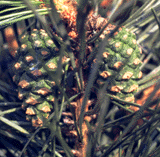
Other terms you may come across:-
- Lower plants usually include Algae and Bryophytes, while higher plants refer to Pteridophytes, Gymnosperms and Angiosperms.
- Vascular plants or Trachaeophytes are those with vascular tissue (xylem & phloem).
- Cryptogams literally means “hidden wedding” and refers to the fact that the sex life of these plants (Algae, Bryophytes and Pteridophytes) was once not understood.
- Phanerogams (meaning “open wedding”) are the seed plants – the gymnosperms and angiosperms.
- Seed plants are the plants with seeds – gymnosperms and angiosperms.
- Embryophytes are plants that bear an embryo and are synonymous with land plants.
- Thallophytes is an outmoded term for plants whose body is not differentiated into root/stem/leaves but is termed a thallus. Algae and fungi fell into this category when they were considered to be plants (which is no longer the case).
C.M. Sean Carrington © 2026
All Rights Reserved